· Outreach
Sharing our research beyond the lab
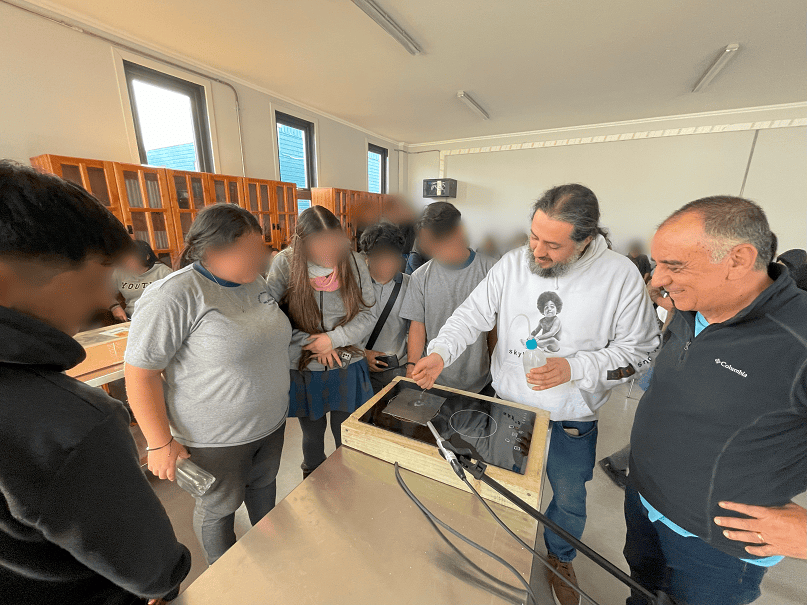
As part of its commitment to knowledge transfer and societal engagement, our laboratory has actively sought to share its research in an engaging and accessible way, especially with young audiences.
One of the specific objectives of the project Fondecyt 1211310 was to disseminate its results through publications in leading international journals, presentations at academic conferences, and outreach activities aimed at the general public. This report summarises the dissemination actions carried out for non-specialist audiences.
Selected news related to the project were published on the social media of the Institute of Acoustics at University Austral of Chile (click, e.g., here and here) as well as its website (see also the research’s lab website here).
The project organised three outreach activities for students from the following schools: (i) Liceo Tecnico Profesional Radio 24, (ii) Colegio Bicentenario Helvecia, and (iii) Colegio Padre Damian. More than 100 students participated in these sessions. Each activity began with the presentation of short videos generated using artificial intelligence, after which the team introduced the Fondecyt Regular project by connecting the video’s content to the project’s research themes. This was followed by live demonstrations of the phenomena shown in the videos.
The videos explained two classical acoustic and thermophysical phenomena: the Ruben’s tube and the Leidenfrost effect.
The Ruben’s tube is a perforated tube closed at one end with a rigid termination and at the other end with a membrane excited by a loudspeaker. The tube is supplied with liquefied gas and then ignited, producing rows of small flames similar to those of a gas stove. When sound is played through the loudspeaker, the flames vary in height according to the acoustic pressure inside the tube. At specific excitation frequencies, some flames rise while others diminish, creating patterns that represent the standing-wave distribution of sound pressure. This illustrates how sound can influence a heat source.
The Leidenfrost effect occurs when a liquid droplet hovers over a hot surface instead of making direct contact with it. This happens when the surface temperature is well above the liquid’s boiling point, creating a thin vapour layer beneath the droplet. At lower temperatures, the droplet evaporates immediately and produces a characteristic sound. In this case, heat determines the acoustic response.
This outreach strategy successfully engaged students and stimulated their curiosity, as evidenced by the photographs included below. The team considers these activities highly successful and intends to continue developing similar initiatives in future research projects.
Outreach activity media
Embedded videos
Photos
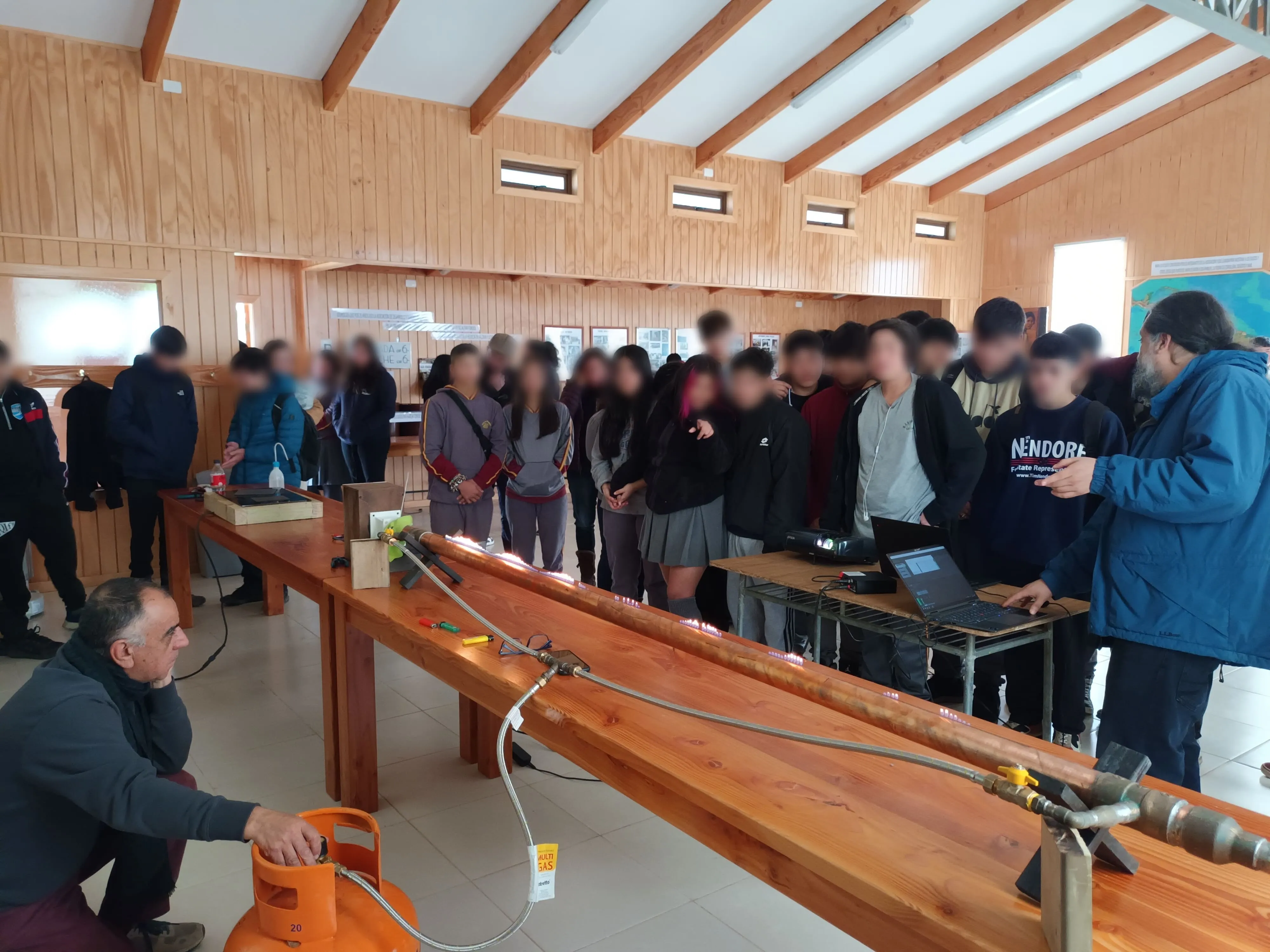
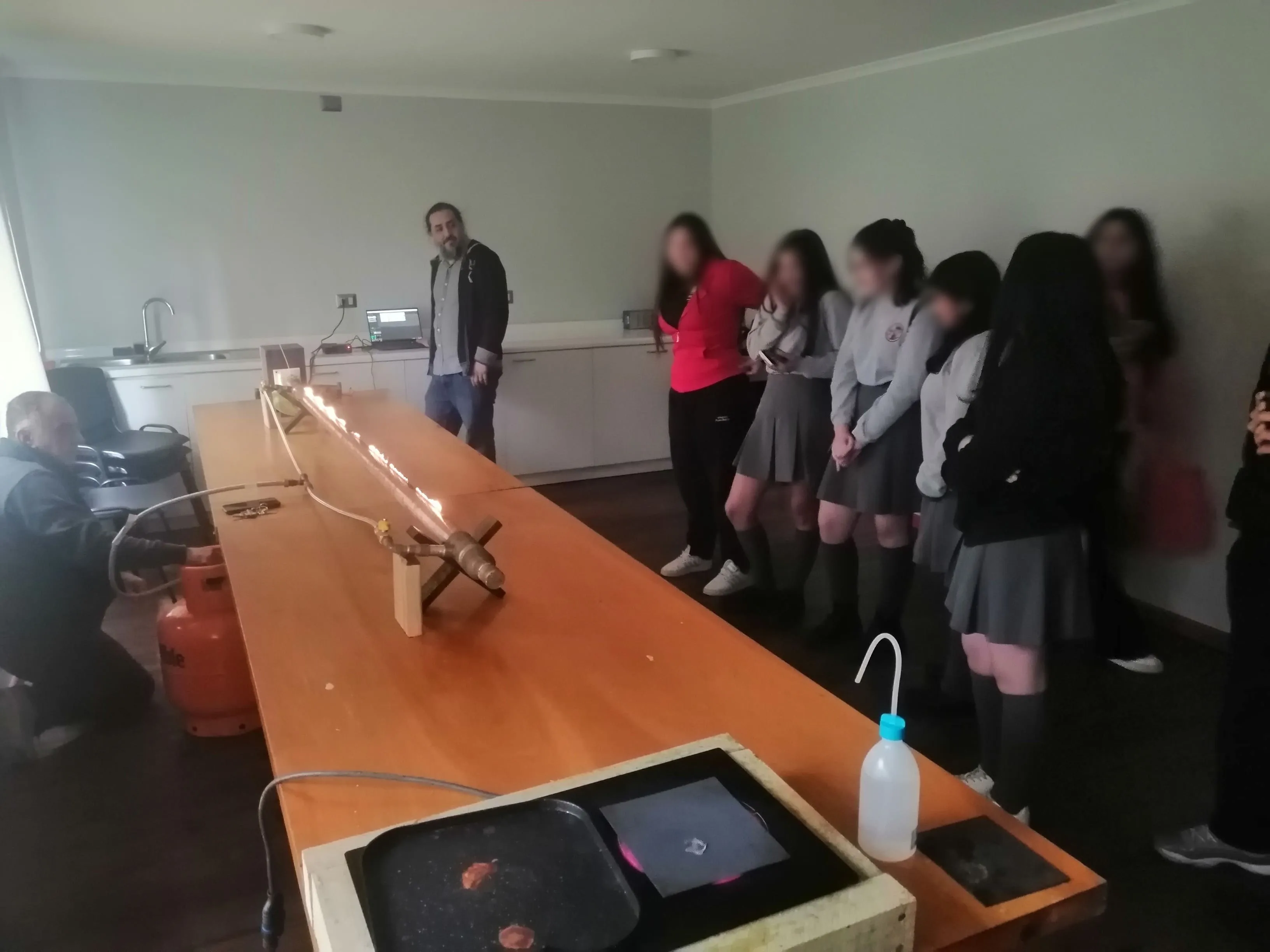
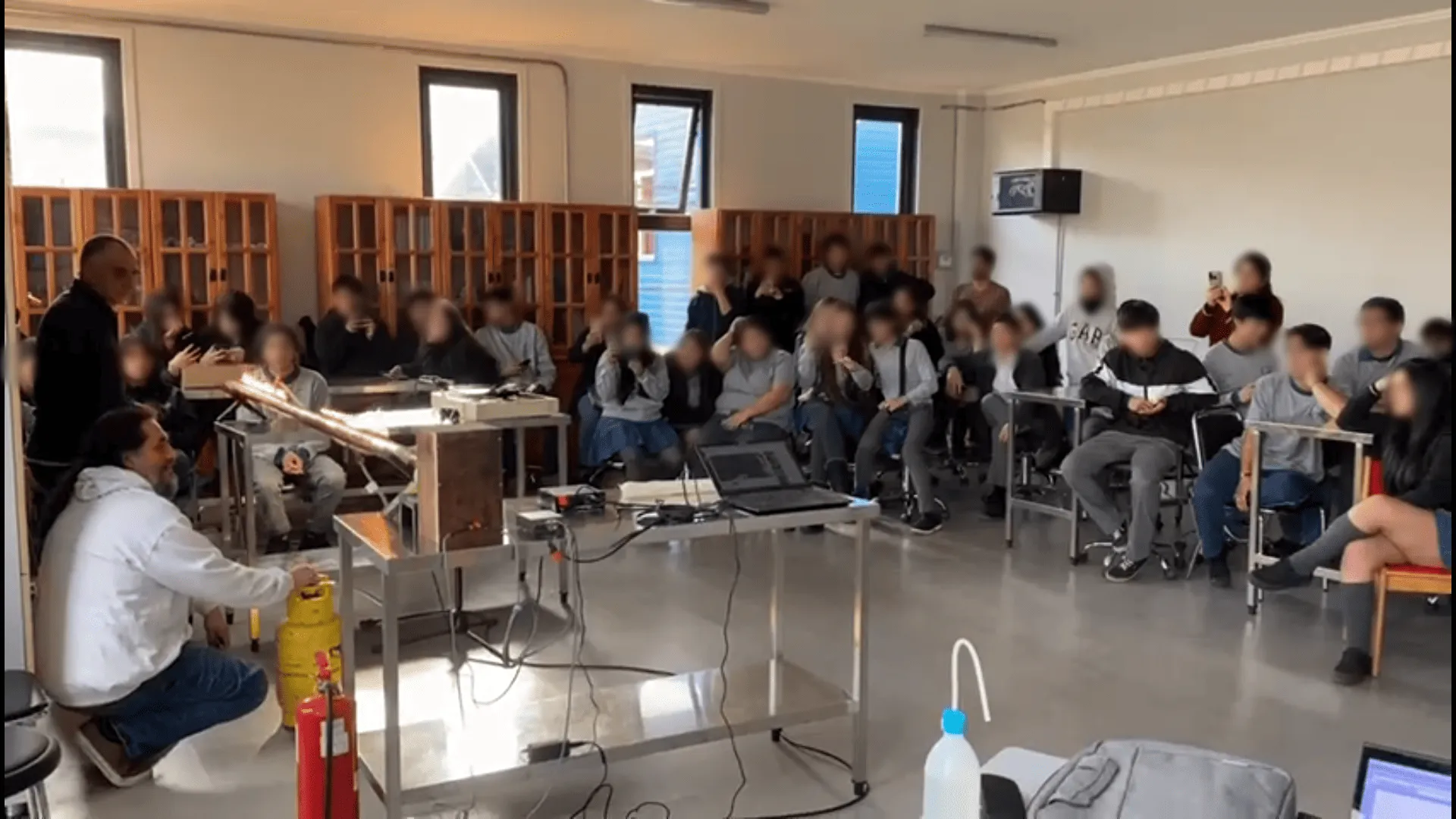
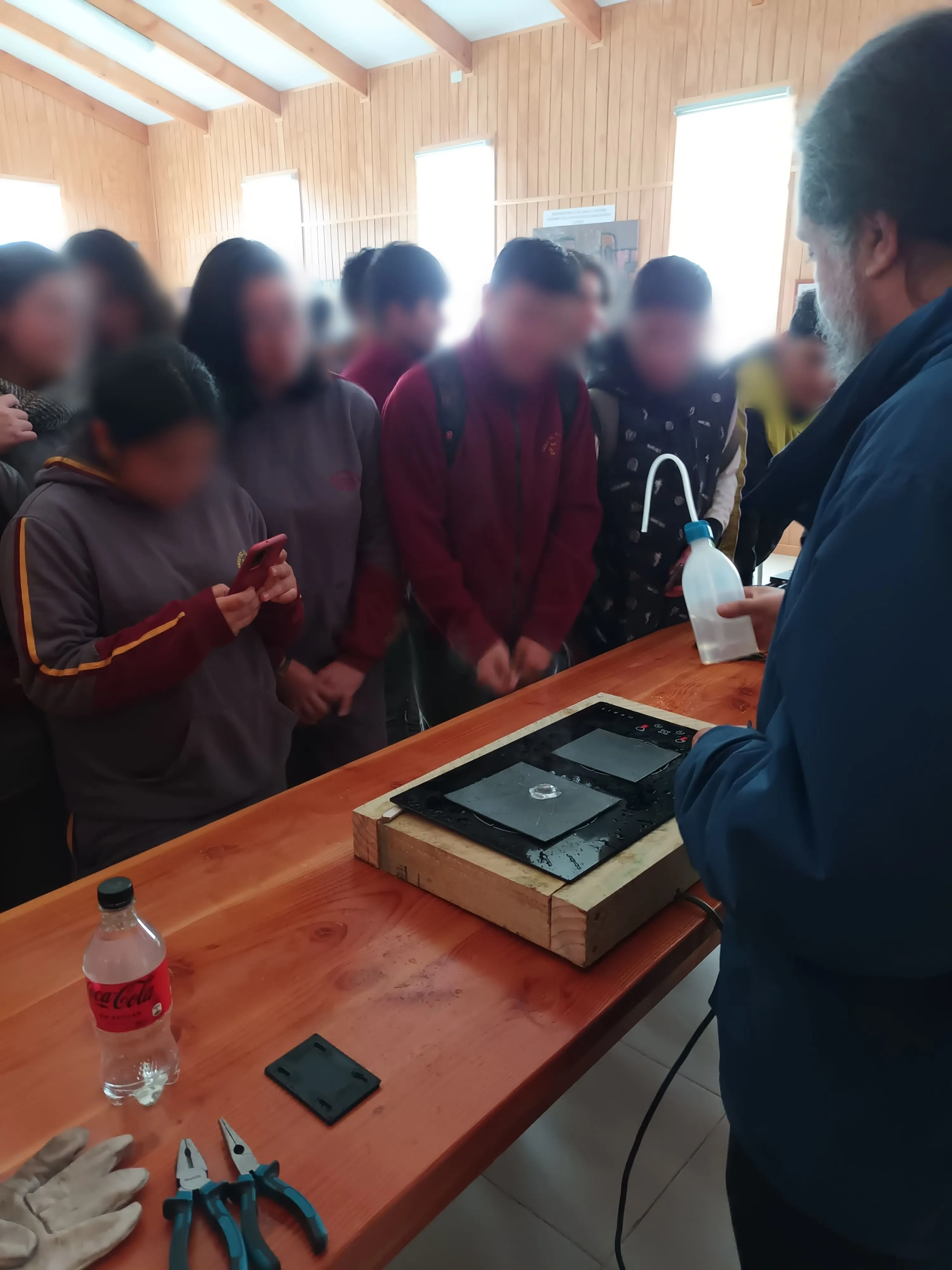
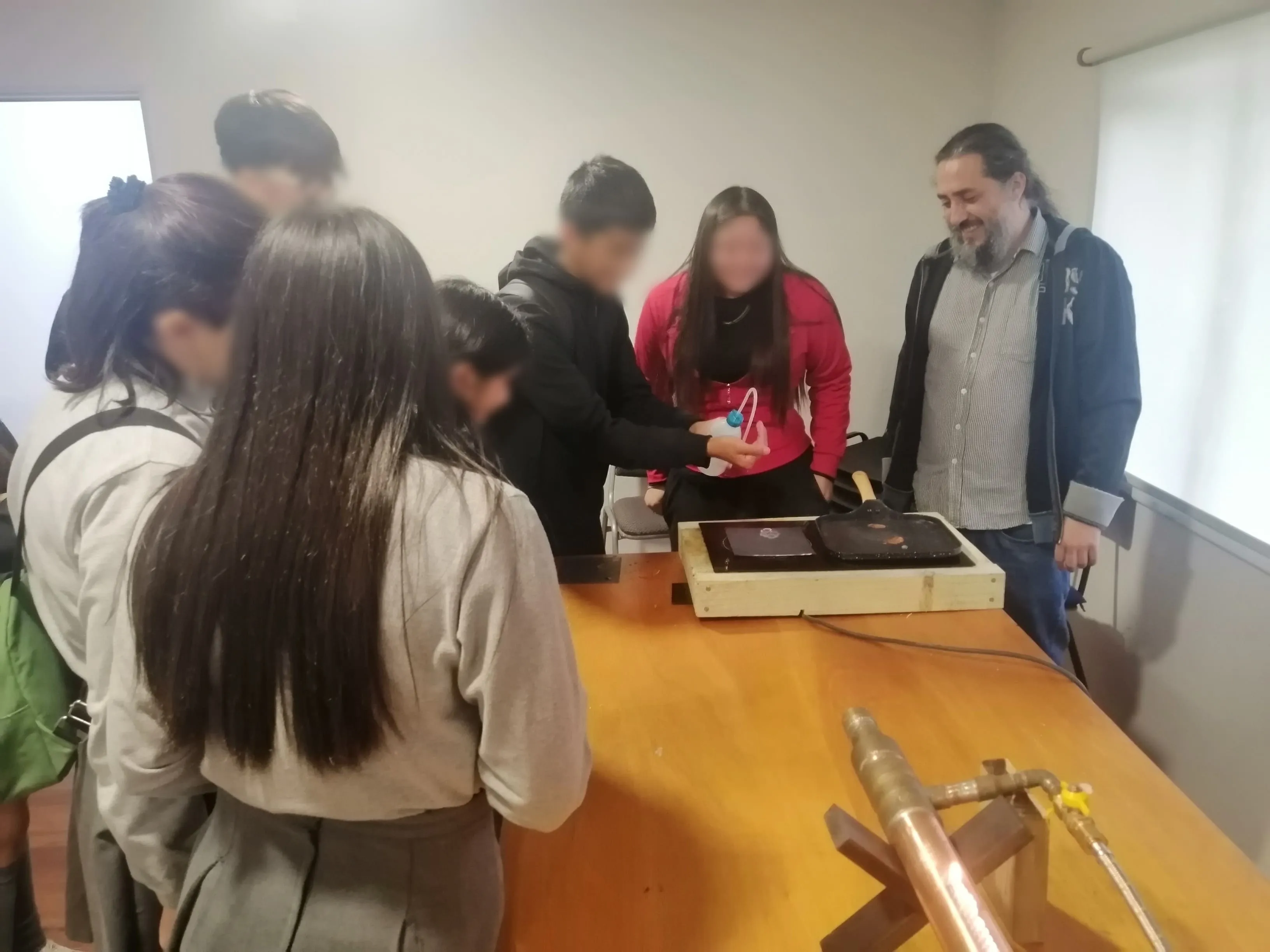
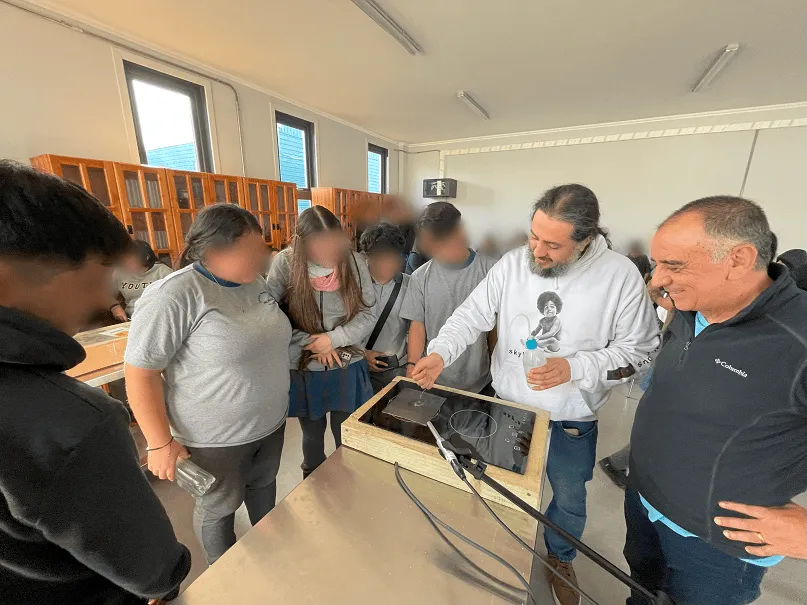
Photographs of the outreach activities conducted with students from Liceo Tecnico Profesional Radio 24, Colegio Padre Damian, and Colegio Bicentenario Helvecia, showing demonstrations of the Ruben’s tube and the Leidenfrost effect.